
















Clear principles for everyday fulfilment

A practical operating framework for Netherlands-based inventory, orders and delivery
Start with clear inventory data
Inbound data, product identification and stock status are aligned first so order handling has a stable base.
Confirm order rules early
Order sources, processing requirements and exceptions are agreed before launch to reduce ambiguity in daily work.
Match packaging to the product
Standard packaging, branded presentation and bundles are arranged around product and project requirements.

Choose delivery by destination
The channel is selected around product, destination and service range. Commitments are confirmed per project.
Keep returns and exceptions traceable
Return destinations, exception feedback and next actions are agreed so each issue has a clear route.
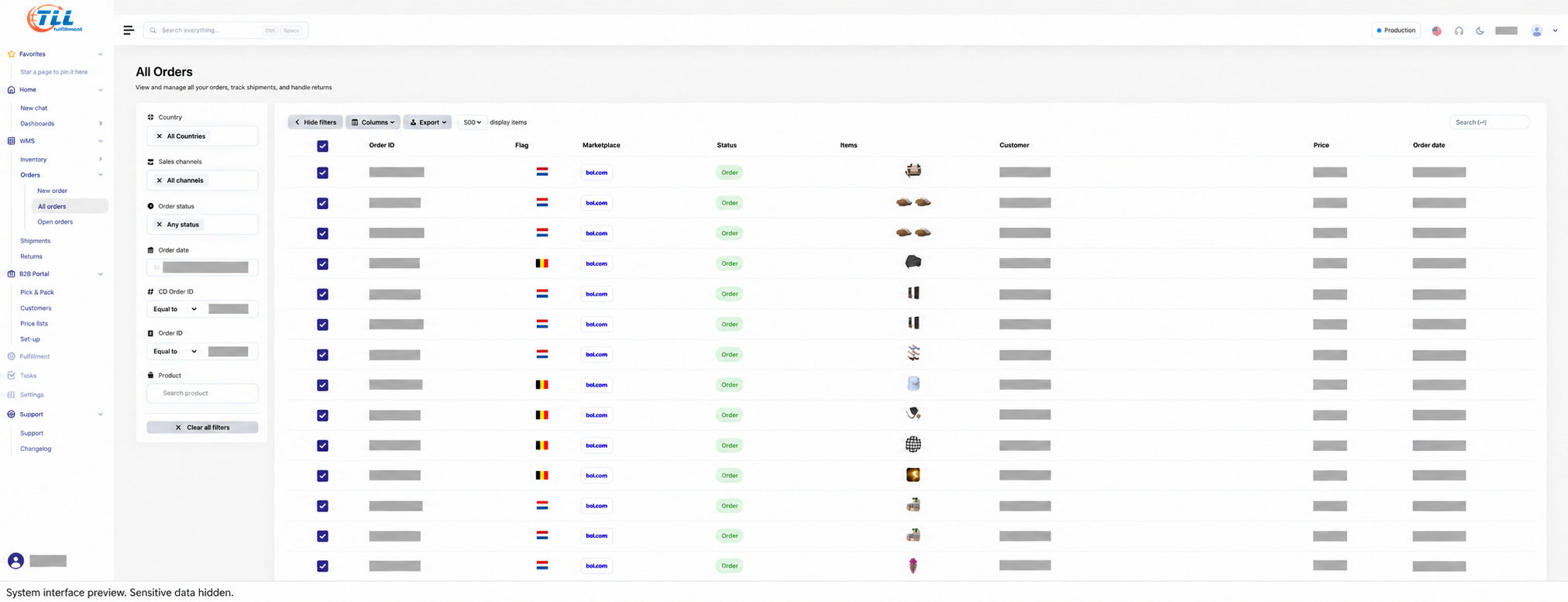
Good fulfilment is not a fixed script. It is a clear arrangement of boundaries, status and responsibility for each project.
Principles that keep fulfilment fit for change
Decisions start with products, channels, order patterns and the customer experience the brand needs to protect.
Service scope, data needs, packaging, delivery choices and communication routes remain explicit.
Product data, labels, inbound information and required materials are prepared before execution depends on them.
Goods, information and responsibility move through defined handovers, with exceptions surfaced early.
Order, inventory, return and exception status should support decisions, not create more administration.
The arrangement adjusts when channels, products or order patterns change—without losing clarity.